Just Plain Floats
May 3rd, ’91
There are three floatplanes in all of Brazil; for a short while, there were four.
Brazil is a poor country, but the bush plane on floats seems ideal for the outback of the Amazon. There are few roads, and until the recent gold rush out
west near Boa Vista, there were few airstrips.
The weather isn’t too extreme. There are no blizzards or whiteouts, and the magnetic compass points north on the equator. It is very hot and humid. The air is much thinner than it is up north. The engine strains for oxygen, and the wings lift poorly in the heated air, even at sea level. The whole of the Amazon is basically at sea level. Manaus, a city 1,000 miles upstream from Belem, is only
forty feet above the ocean.
Belem is a city of a million people, founded by the Portuguese on Christmas day in 1601 at the southern edge of the Amazon delta. Belem is Portuguese for “Bethlehem”. It’s on a hill by the Rio Guama, a fork of the Amazon carrying only 10% of the flow, yet wider than the Mississippi at St. Louis by a factor of five. Hills are hard to find in the delta, and perhaps that’s why the Portuguese picked the spot.
I was there last year to maintain an airplane being used in a movie. The movie is about missionaries, mercenaries, Indians, Federales, campesinos, and who gets the jungle. I couldn’t help but wonder who’d want it.
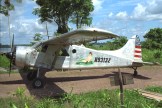
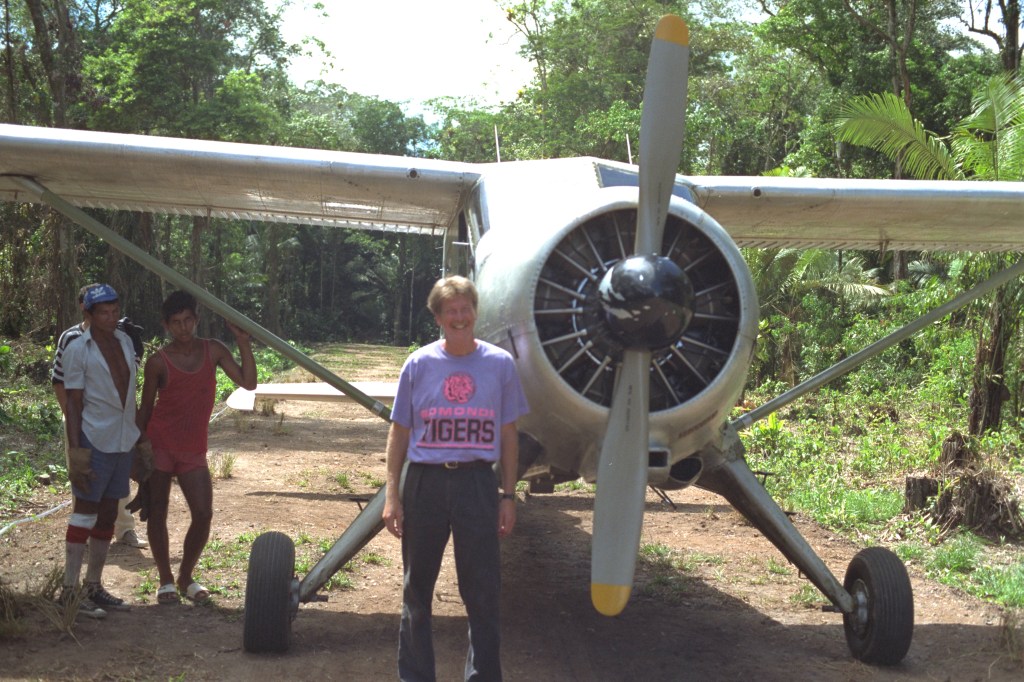
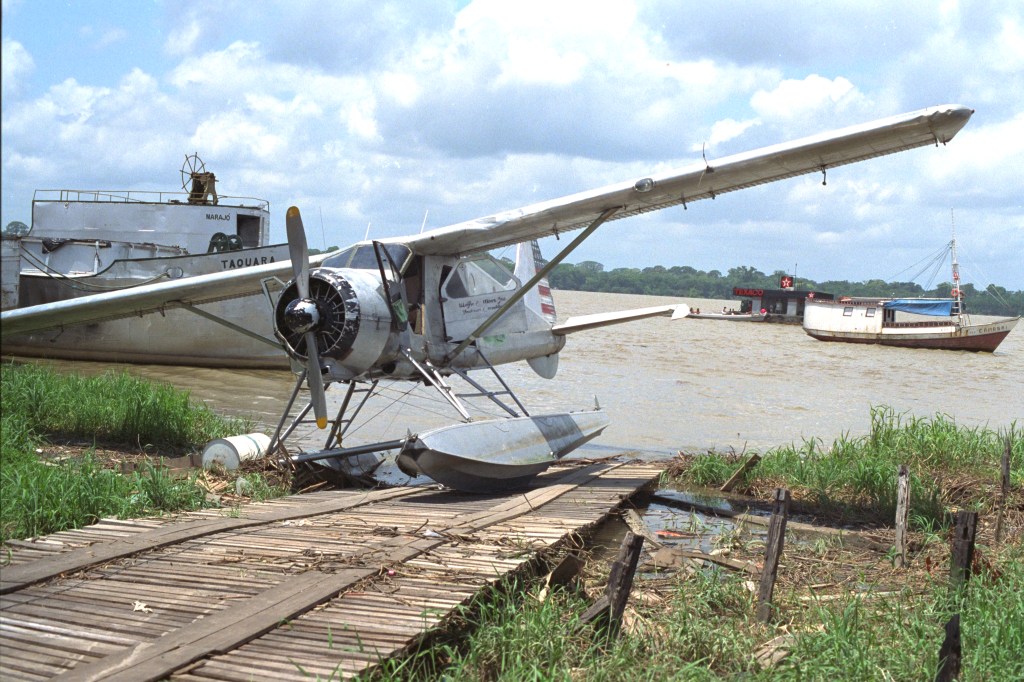
The plane is a DeHavilland Beaver, DHC-2. It’s a famous bush plane made in Canada after WWII for the Canadian bush and the American military. It’s a very safe, strong, slow airplane, good at carrying heavy loads and able to take off and land on short dirt runways. It doesn’t take much maintenance. It is also the best performer on pontoons ever built and is easy to fly. It’s a very forgiving airplane. Make a mistake, and the machine probably won’t kill you.
The plane had been ferried down to Belem by Barry Morris. I’ve never seen a man’s eyes so sunken into his head. Barry had just flown the Beaver for five days, 64 flight hours, from St. Cloud, Minnesota, to Belem.
Barry said the hardest part was dealing with the customs officers in each of the little kingdoms of the Caribbean. The Brazilian customs weren’t much better.
They made him fly back to Cayenne, French Guiana, because he didn’t have a visa. We kept the plane.
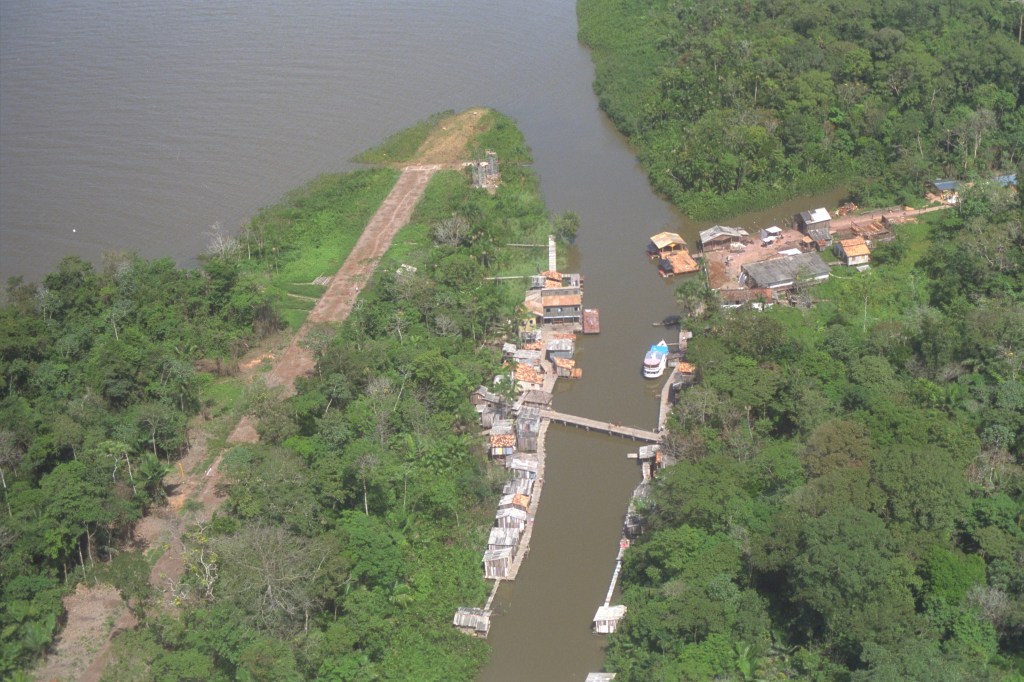
All went well for a while. I fixed the pilot’s squawks, and David Jones, the aerial coordinator and stunt pilot, flew the plane into the quarter-mile strip built over the swamp at the movie location. This strip is built on pilings driven into the mud with planking on top and a covering of dirt, so it looks like a dirt strip. It was very narrow. There was only five feet of clearance off of each main wheel. It was like landing on an aircraft carrier without the arrest cables and with tall trees at one end. It was a one-way in and out strip with no go-around for a missed approach.
The funnest part was landing there at dawn because David had to look straight into the rising sun at the dead end of the runway. DJ would come in low over the river, flaps down, hanging on the prop. My asshole puckered the first few times, and then I just figured death was as good a way as any to leave Belem.
Jones would look down out the side window; it was impossible to see ahead, and as the river ended and the runway started, he’d cut the power and guess. It reminded me of Lindbergh and his periscope on the “Spirit of St. Louis”. He didn’t even have a windshield.
The plane survived this “runway” many times. Jones is a damn good pilot.
The first plane crash belongs to Pastor Benny. Pastor Benny and his Pentecostal Church own two of the floatplanes in Brazil. He flew them both down from the States. One is a Cessna 172, and the other one we used in the movie is a Cessna 206.
Pastor Benny is Canadian and a great guy. He’s tall, round, wears glasses, and loves to laugh and talk non-stop. Benny wears khaki work shirts and pants with a straw hat to protect his balding head. He has fifty ministers/couples spread over the inner Amazon. Benny and his wife live in Manaus, and he flies from there to all his parishes. He has gas cached on every river to help him spread the Word.
Benny was nervous as I pushed out his plane into the river. He’d been flying okay in rehearsal, but this time, the film would be rolling through the camera. Benny also had three stand-ins as passengers. It was the “Arrival of the Missionaries” scene, a couple and their son. I’m wondering why these people are in the airplane when it’s just a landing and approach to the dock, and the camera can’t see who the hell’s in the plane anyway. I also think it’s ironic that a missionary is flying fake missionaries in a movie that criticizes what Benny does for a living.
And Benny is nervous. He can’t get the pattern right. His landings are too far away from the camera. The camera can’t find him in the sky.
Jones is talking to Benny on the radio, and I have a radio and listen in. I ask Benny to check his fuel. Two army choppers fly by and ruin the one good take we’ve had.
And then Benny flies over the runway, and I look up, and he’s flying low and slow. When he does his downwind turn over the river to come in to land, he’s still too low and slow, and I hear him go to full throttle. I see him crash into the elephant ear plants on the riverbank. My soul stopped for a second. I knew they were all dead. The impact sent water flying up into the air. I had just talked to the man.
A second’s silence, and then the chopper with the aerial unit’s camera takes off behind me, and boats from the movie village on the creek head out to the crash
site. No one was hurt. The plane didn’t even sink or sustain major damage. All those pulpy elephant ear plants saved Benny’s ass.
They towed the plane back over to the ramp, and I looked it over. Everything was green. The engine compartment looked like the bottom of a lawnmower.
Benny was even more rattled than before, but the plane was okay and the stand-ins were okay, though the boy said he’d never get in a plane again.
Soon, there were “Pastor Benny Turn” jokes, his plane was repaired (not by me), and then he left. “Pastor Benny ran away!” His bishop had read the script or book
and discovered it was very anti-religious. He forbade Benny from participating in the movie.
So Benny flew away at 5am back to Manaus, never to return. All his scenes had to be reshot using the only other floatplane in Brazil. It was owned by a Federal Narcotics agent also based in Manaus. He was the opposite of Benny, thin, mean, short, taciturn, and he didn’t crash, and it only took two takes to get the scenes.
David Jones had an idea. The next movie location, The Mission, was on the Rio Acara, and 90 minutes by boat from Belem. Why not put the Beaver on floats (it doesn’t have any scenes at the Mission location) and fly the actors and bigwigs back and forth from Belem in 30 minutes? The plane is just sitting there, and here’s a chance to save the movie company some time and money and make some money for Jones and McKernan Inc.
I was not thrilled with the prospect of getting the float parts through Brazilian customs, assembling them, and then installing the floats on the aircraft. Also, finding a way to get it to the river from its hangar at Belem Int’l airport, but that’s another story.
We put the Beaver on floats, and it flew back and forth for a few weeks. Chris Joachim was the pilot, and he was doing okay. I took a few weeks off and went home. When I returned, Chris, a blonde Californian about 25, was thoroughly Brazilianized. His health was shot. It’s not easy to resist beautiful women knocking on your hotel room door at 3am demanding sex.
I flew with him to the set in the jungle, and Chris was very happy to see me. The rest of the aerial unit was gone. David Jones and company were back in California. Manuele and Andrez, the boys from Brazil, were in Italy and Rio de Janeiro, respectively. So now it was just Chris and me to try and convince the production company that,” Hey, we need a dock!”.
Tying up to a buoy in this river, where the tidal currents are ten knots, and then putting the actors into small boats to carry them to shore isn’t very safe.
One day, Chris came back to the river, and the plane was gone! The tide had carried the plane, the buoy, and its 500-pound anchor upriver. Chris and Mike, the truck generator engineer, commandeered a dugout canoe with a motor and rescued the plane. No damage done. Shoo Shoo Baby’s (painted on the side) luck was holding. Maybe that mermaid on the fuselage can swim.
I’d work on the plane at the dock (finally installed) and watch trees four feet thick go up and down the river with the tides. One got caught between the floats, and I had to push the log back out into the channel.
Takeoffs were always a thrill in the afternoon. The Beaver took forever to get up enough airspeed to break free of the water. I thought there was something wrong with the propeller, but it was just the superheated air. It was 105 degrees with 80-90% humidity. What is that “density altitude” anyway?
Chris was sick and had spent the day in the director’s cabin on the “death boat” moored at the Mission location for the grunts who wouldn’t be going back to Belem except on Saturday nights and then back to “Das Boot” on Monday. I called it the “Amoebic Dysentery Cruise Line”. The intake for the ship’s water was either just upstream or down from the ship’s wastewater outlet, depending on the tide’s direction.
Chris was spent. It was late, maybe 5pm, and an hour until sundown. It’s your basic 6am to 6pm day, year-round on the Earth’s middle. It was hot and humid, and the sky was still blue. The afternoon thunderstorm was late. Everyone
“Big” wanted to go back to Belem.
And they were literally “Big Shots”. Saul Zaentz, producer, Hector Babenco, director, Steve Andrews, first ass. director, and Phil, second ass. They were all over two hundred pounds. On this take-off, Steve and Phil were in the rear seats with skinny Annette Carter, the script girl, between them. In the middle seats, we had Nelo, the Finn boy, who plays the missionary’s son in the movie. He was between his large governess and another heavy-weight, ah, yes, Kathy Bates (no offense).
I had the co-pilot’s seat. The ring-side seat. The death seat.
Chris taxied out into the river and headed upstream, but now it was downstream with the tidal current. Chris was fighting the current on takeoff. We went a ways and he pushed up the throttle some more. The plane wasn’t getting “up on the step”, the transition stage between boating and flying.
The RPM gauge was at the red line, and so was the Manifold Pressure gauge. Our speed is stuck at 40 knots. It takes at least 45 or 50 to make the Beaver fly. We mushed through the water, heat, and humidity.
Chris became impatient and yanked back the control yoke. The Beaver leapt up 30 feet into the air, but it wasn’t going fast enough to fly. The plane began to fall towards the river.
“My God, he’s stalled us!” Was all I could think.
I felt Chris push in full right rudder and crank the wheel hard right. The noise from the engine strangely gone.
All I saw was blue sky as I waited for the muddy brown water.
A second later, it was flat, splatt! Chris had lowered the nose? The mermaid on the side had straightened the
plane? Irish luck or prayers from home?
The plane stalled flat onto the water, and we hit with a big splash! But both floats hit at the same time, absorbing the shock. We bounced back up into the air, and Chris kept her level through two more controlled crashes, then we were airborne, slowly climbing, breaking every rule in the Beaver Flight Manual. The Beaver is a forgiving plane.
Chris and I were afraid to talk to each other over the intercom. We both looked straight ahead for five minutes, waiting for our passengers to say,” What the fuck do you bastards think you’re doing!” But it never came. Our Hollywood know-it-alls didn’t know they’d just won the lottery.
Then it was a laugh, another joke, but Chris didn’t fly for another two weeks. He was very sick. It was touch-and-go for a while. He had the lung bug, Gripado. The same bug that sent me home two months later. The Brazilian doctors prescribe mega doses of antibiotics to fight the disease. It’s touch and go over which one of the “biotics” will kill whom: the disease, the antibiotic, or you.
I changed the seats around in the plane so the center of gravity wouldn’t be so far aft. No more near crashes for me, thanks. I installed the three-place seat in the middle (yes, the famous Kenmore seat) and put two jump seats in the back. This limited the number of passengers to six instead of seven and moved the center of gravity (c,g) ahead two feet (for you aviation buffs). It made the plane more balanced and safer.
Chris and I made one more week of flights together to the Mission location after he was well.
I fixed the windshield and water rudder system there at the dock on the Rio Acara under the torch of the sun as natives rowed by with propane bottles and TVs in their dugout canoes. The bare aluminum of the plane was like a mirror. I have never been so hot, baked, or broiled.
It was a Friday. The plane was full that morning and fully repaired, so I stayed behind at the hotel for the first time. I enjoyed the day. I hadn’t had a day off for over a week. The Hilton’s pool and bar were a welcome respite from the plane on the river.
About 5pm, as I stood at the pool bar, the biggest squall of my visit poured down on Belem. The weather in Belem is mostly predictable. Every morning it’s clear
and 75 degrees F, or 23C. By 9am, three hours after sunrise, it’s 85 or 90°F, 35 °C, and you sweat in your shoes all day.
Sometimes it gets up to 40C and that’s over 100F with HUMIDITY! This isn’t Phoenix. And that’s what it did this Friday, and when it gets that hot and humid, the thunderheads build high. At Madre de Deus, it happened one day. We were shooting a scene on the runway, and it was 5 pm. The clouds were building to the East. It had been a scorcher of a day. Mike Cain and I looked across the river to the North and saw
blue sky. A minute later, there were puffs of gray above the trees. In another minute, there was a dark gray line of clouds. We watched in awe as these clouds built themselves into thunderheads in front of our eyes, as if in time-
lapse photography.
In ten more minutes, these clouds had crossed the river and were drenching us in a cloudburst, a hosing, as we pushed the plane down the runway to its overnight tie-down spot. The grips ran to get the camera equipment to a dry place.
This happened to Chris on that Friday. He’d taken off from the Mission location on the Rio Acara, and it was clear. There was no radio weather communication, and if there was, it would be in Portuguese.
In fifteen minutes, he was halfway to Belem and surrounded by thunderheads that had grown up around him like giant mushrooms around Alice in Wonderland.
He had nowhere to go. So Chris followed the river,”on the deck”. He’d flown the route so many times he knew the channels and made it back to Belem and the Rio Guama, but he looked down and the river was a tempest. Three to four-foot waves were leaping about in the main channel. The rain wasn’t falling. It was a fire hose stream all around.
Aidan Quinn, an actor, was in the co-pilot’s seat, Tom Berenger and the other bigwigs in back. Chris asked Aidan to call out his estimate of their height over the water. Chris could see little ahead, nothing, but he couldn’t go up into the thunderheads and williwaws. He had to stay down low and remember where he was. Aidan called out his heights, “20′, 15′ 10′,…3′,2,2,2′” (Aidan told me he
thought Chris was checking his pilot’s skills ’cause Chris had been teaching him how to fly. Aidan had no idea that Chris was relying on him to make a landing.)
And Chris made the landing! When he heard Aidan say, “Two feet! Two feet! Two feet!” Chris cut the throttle and flared the Beaver in for a perfect landing, but the fact that Chris could only see 25 yards ahead meant the Beaver needed more distance than that to land on the water. There are no brakes.
A boat appeared ahead. Chris swerved left and saw a big steel barge tied up to shore. He turned right, yelled,” Brace yourselves!” The right float and propeller smacked that barge and left a small rusty scar on it. The plane sank
nose first in a fathom (6 feet) of muddy water.
The passengers and pilot climbed out onto the wing strut, clambering up onto the barge. No one was hurt. The right float absorbed the force of the collision as if it were a crumpled beer can.
Three seconds made all the difference. If Chris had cut power and landed three seconds sooner, it might have been okay, or maybe they would have landed in the maelstrom of the middle of the river. Three seconds later, and they would all be dead, smashed up against that barge or other hard objects on the river’s shoreline.
I don’t know, and neither does anyone else.
Mike Cain and I tried to calm Chris down and laugh at it all as we watched the natives cavort in the water with empty fifty-gallon drums and ropes tied to the piers, re-floating the plane. There were hundreds of kids yelling and laughing on the jetties, watching the older kids play in the mud and river with their bright, shiny toys. A toy that the adults had broken.
“Humpty-Dumpty” was put back together again in seven sweaty weeks. All the king’s soldiers and all the king’s men, those damn customs guys, tried to stop us.
But we put “Shoo Shoo Baby” back together again.
And it’s flying now, and we’re all alive. We’re all alive.
TJM
Epilogue: The Beaver survived the Amazon and was sold to an operator in Southeast Alaska. Years ago, the pilot of the Beaver, and three passengers, Forest Service employees, took off into the forests of SE Alaska. The plane never returned. It has never been found.
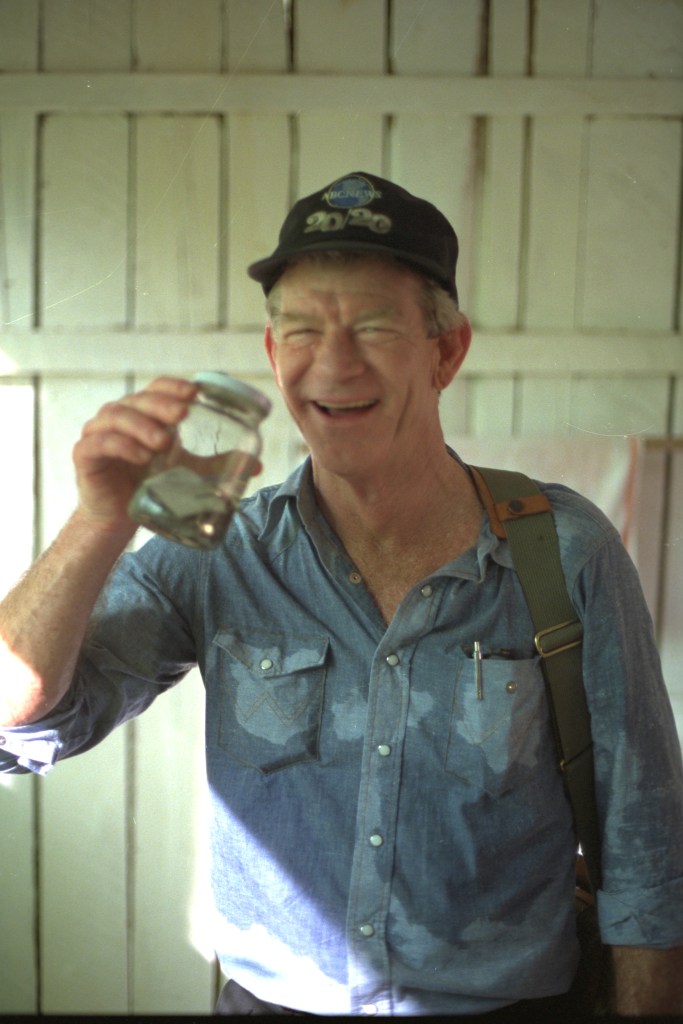
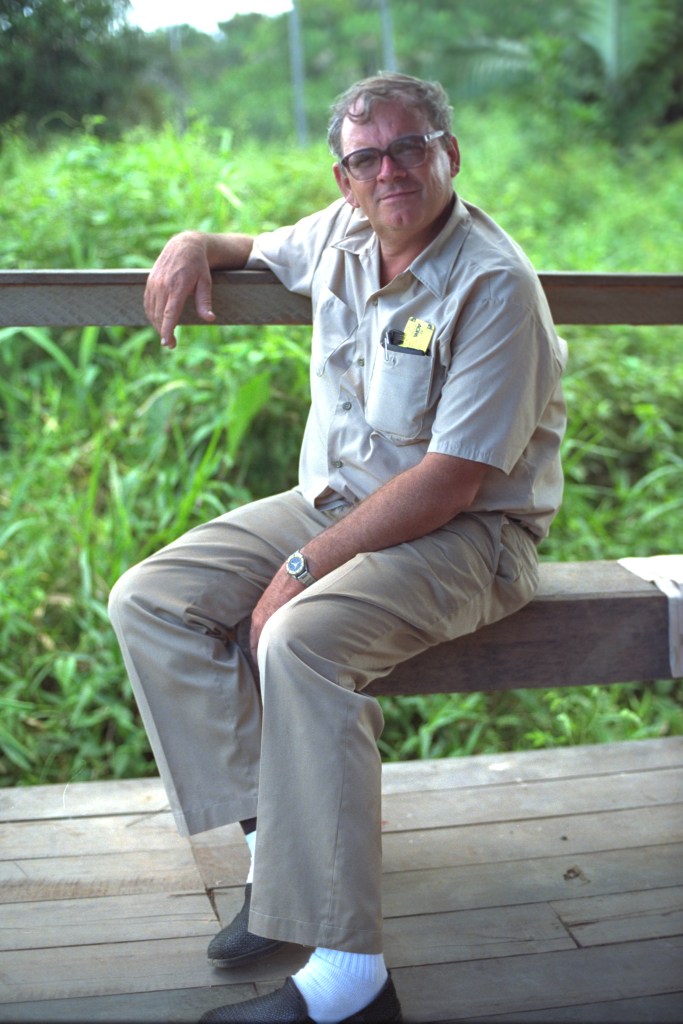
In a week or so, it will be the 35th anniversary of the Beaver crashing into the barge in Belem. So, I edited this story from May of 1991 and added some photos from that summer of 1990 in the jungle outside Belem, Brazil.
Tim

 Timmy Tae's Thoughts
One thought on “Just Plain Floats”